

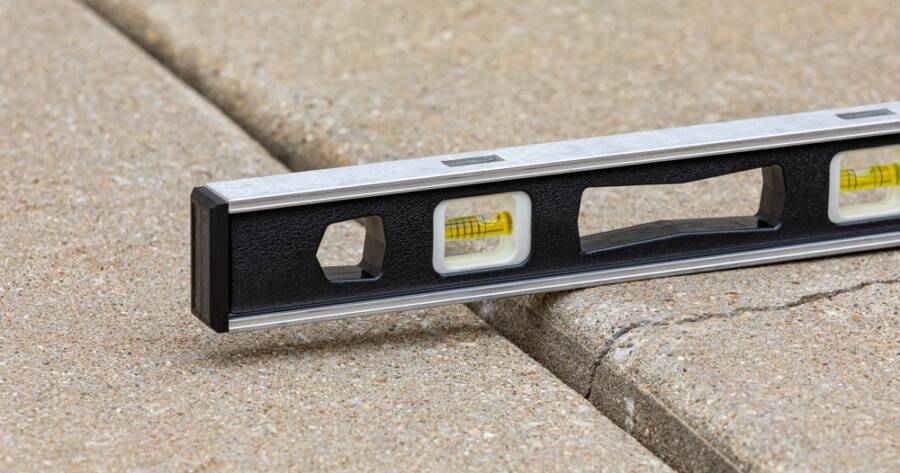
A sinking driveway, patio, or walkway does not always mean the concrete has to be torn out and replaced. Several repair methods can restore uneven slabs, but their costs, materials, and ideal uses differ considerably. Understanding what separates mudjacking, foam leveling, and full replacement can help homeowners ask better questions before committing to a concrete repair project.
Why Concrete Slabs Sink in the First Place
Understanding what causes concrete to sink helps homeowners make smarter repair decisions. Several natural and construction-related factors work against concrete over time. Poorly compacted fill dirt placed beneath a slab during original construction is among the most common culprits (source). As that material settles unevenly, voids form beneath the slab, leaving sections without adequate support.
Subsurface erosion and soils that shrink during dry conditions are also major contributors to sinking slabs (source). Water movement under a slab can wash away fine particles over years, creating gaps the concrete eventually collapses into. Tree roots that aggressively push upward or pull moisture from the soil create yet another form of uneven shifting that can lift or tilt concrete sections unpredictably.
Traditional Mudjacking: How It Works and What It Costs
Mudjacking, sometimes called slabjacking, has been the industry standard for concrete lifting for decades. The process involves drilling small holes, typically between one and a half to two inches in diameter, directly into the sunken slab (source). Technicians then pump a slurry mixture of cement, soil, and water under low pressure through those holes, hydraulically pushing the slab back toward its original position. Once the desired height is achieved, the holes are patched, and the surface is ready for use within a short period.
From a cost perspective, mudjacking is widely considered an economical solution. Standard mudjacking services can start at approximately $3 per square foot, making it significantly less expensive than tearing out and pouring new concrete (source). Concrete leveling remains less expensive than full replacement in many situations. According to 2026 Angi data, professional leveling typically costs about $661 to $1,874, while mudjacking projects average roughly $1,235. Final pricing varies considerably with slab size, access, location, and the amount of lifting required. (source)
Polyurethane Foam Injection: The Modern Alternative
Polyurethane foam injection has emerged as a faster, less invasive lifting method compared to traditional mudjacking. Rather than pumping a heavy grout slurry, technicians inject a lightweight expanding foam through smaller drill holes. As the foam expands and cures, it fills voids and lifts the slab from below. The material hardens quickly, often allowing the area to return to service the same day.
This method does carry a higher price point, with costs reaching up to $25 per square foot in some cases (source). However, the trade-off comes in the form of a lighter material that won’t add significant additional load to already compromised soil, smaller access holes that are less visible after patching, and a much faster curing time. For homeowners prioritizing minimal disruption and a cleaner finished appearance, foam injection often justifies the premium cost.
Both mudjacking and foam injection are presented as alternatives to each other rather than strictly competing products (source). The best choice between them often depends on the specific soil conditions, the size of the slab, budget constraints, and how quickly the repaired surface needs to be back in use.
When Concrete Replacement Makes More Sense
Not every sinking slab is a good candidate for lifting. Certain damage conditions make replacement the more practical and cost-effective path forward. When a slab has developed extensive cracking that compromises its overall stability or has begun to crumble in sections, no amount of lifting will restore its structural soundness (source). Similarly, tree roots that have pushed concrete too far out of alignment may have caused irreversible damage that leveling simply cannot address (source).
A useful rule of thumb is to weigh the projected repair cost against the cost of replacement. When damage is extensive enough that repair costs approach or exceed what full replacement would run, starting fresh with new concrete often makes better long-term financial sense (source). A new concrete slab can cost as much as 70 percent more than leveling an existing one, but that premium may be worthwhile when the slab in question is significantly deteriorated (source).
Homeowners dealing with slabs that have only moderate sinking, minimal cracking, and no major structural failure are typically excellent candidates for leveling rather than replacement. Raised or sinking slabs in relatively sound condition can often be addressed effectively through concrete leveling, grinding, or patching approaches (source). The key is an honest assessment of the slab’s current condition before committing to a method.
Evaluating the Right Method for Each Situation
Choosing between mudjacking, foam injection, and full replacement requires considering several factors simultaneously: the extent of existing damage, the underlying soil conditions, the desired longevity of the repair, and the total project budget. Mudjacking remains the most budget-friendly lifting option and is particularly effective on larger slabs where cost per square foot adds up quickly. Foam injection suits homeowners who want faster results with less visible evidence of repair work. Replacement becomes the responsible choice when a slab has deteriorated beyond the point where lifting would provide a durable, lasting outcome.
Consulting an experienced concrete professional is always a sound approach when the condition of the slab is difficult to assess independently. Concrete replacement may be necessary when a slab is severely cracked or missing sections, and homeowners should consult an experienced professional to determine the most cost-effective option (source). A qualified contractor can identify whether voids beneath the slab are causing the problem, whether the concrete itself retains structural integrity, and which method will deliver the best value over time.
Why You Should Learn More About Concrete Leveling and Replacement Options
Sinking concrete affects safety, curb appeal, and property value, making it a problem worth addressing promptly and correctly. The difference between mudjacking, polyurethane foam injection, and full replacement comes down to the slab’s condition, the underlying cause of the sinking, and the homeowner’s priorities around cost and convenience.
Mudjacking offers proven results at a lower price point, foam injection delivers speed and minimal disruption, and replacement stands as the right answer when a slab is too damaged to save. Knowing the distinctions between these methods empowers homeowners to have informed conversations with contractors, avoid unnecessary expenses, and choose the solution that will hold up over time. Understanding concrete leveling options is an investment in both property protection and long-term peace of mind.