

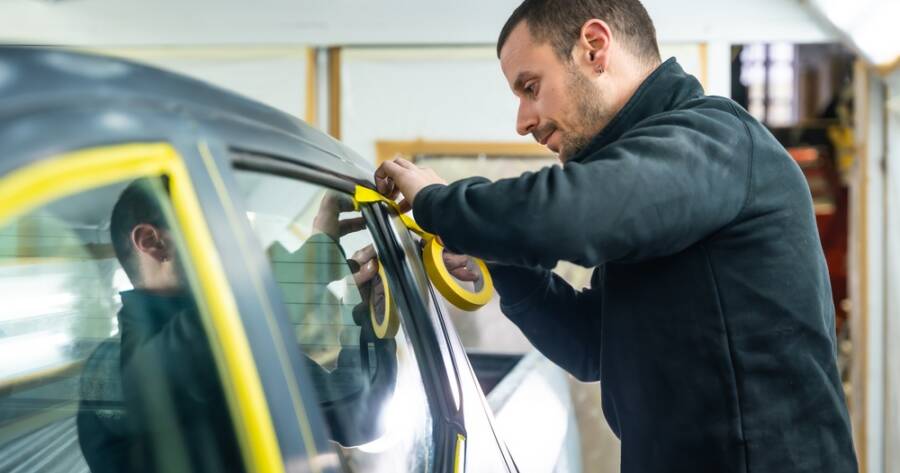
A professional paint job can dramatically refresh a vehicle, but the finished result depends on far more than choosing the right color. Preparation, materials, technician skill, shop equipment, and the scope of the work can all affect quality and price. Knowing what separates one auto paint shop from another can make it much easier to choose confidently.
What Professional Auto Painting Actually Involves
Auto painting is far more than simply spraying color onto a car’s surface. Professional paint work involves multiple stages, specialized materials, and technical expertise that vary significantly depending on the job’s scope and the shop’s capabilities. Understanding what happens behind the scenes helps vehicle owners set realistic expectations and ask the right questions when evaluating their options.
Most modern vehicles use a multi-layer paint system consisting of a primer, a color basecoat, and a protective clear topcoat, with acrylic polyurethane enamel being the dominant finish type found on today’s cars (source). High-end vehicles often receive even more complex finishes, such as tri-coat or multi-stage systems that include a translucent mid-coat loaded with pearl additives, all sealed under a final clearcoat layer for depth and durability (source).
Environmental responsibility is also reshaping how professional shops operate. Waterborne paint systems have gained widespread adoption because they reduce volatile organic compounds, which have been banned or restricted in certain regions due to the health and environmental hazards that older solvent-based products present (source). Shops that use waterborne systems often signal a commitment to both quality and responsible practices.
How Much a Professional Paint Job Costs
Paint job pricing spans an enormous range, and vehicle owners should understand what drives that variation before budgeting. The total cost depends on the quality level chosen, the size of the vehicle, and the extent of preparation work required. Entry-level paint services and premium restorations exist at completely different ends of the spectrum.
At the lower end, basic paint services typically run between $300 and $1,000. These jobs usually involve minimal surface preparation and a single coat of standard paint (source). Premium work, by contrast, can reach $5,000 to $20,000 or more, often requiring the vehicle to be stripped down to bare metal before receiving multiple coats of high-grade paint (source). The difference in outcome between these two tiers is substantial.
Vehicle size is another key pricing factor. Painting a compact car generally costs between $2,000 and $3,500 for a mid-range service, while a full-size SUV or pickup truck can push that figure to anywhere from $3,500 to $7,000 (source). Collecting multiple estimates from different shops, at least three, is a practical step that AAA recommends before committing to any provider (source).
Certifications That Signal a Trustworthy Shop
Not every shop that advertises paint and body work operates at the same standard. Industry certifications exist to help consumers distinguish qualified professionals from those who may lack the training, equipment, or processes to deliver safe and lasting results.
I-CAR Gold Class is widely considered the highest training designation available in the collision repair industry, yet only around 20% of shops across the United States have achieved this status (source). Consumers can verify a shop’s standing directly through the I-CAR website using the shop locator tool (source). For owners of luxury or specialty vehicles, OEM certifications from manufacturers such as Ford, Tesla, and BMW indicate that a shop has met strict requirements covering equipment, facility standards, and technician training before being approved to perform manufacturer-endorsed repairs (source).
Material compatibility is another dimension where certifications matter. Vehicles built with aluminum body panels require dedicated tools and isolated workspaces to prevent galvanic corrosion, a chemical reaction that can occur when aluminum and steel particles mix (source). Shops without proper aluminum repair credentials should not be trusted with these vehicles regardless of how competitive their pricing appears.
Beyond certifications, longevity is a useful proxy for reliability. AAA suggests prioritizing shops that have maintained continuous operation for at least five years, and confirms that verifying insurance coverage is equally important before any work begins (source).
Matching the Right Shop to the Right Job
Every paint project has different demands, and the best approach is matching the shop’s capabilities to the specific scope of work involved. A daily driver needing a cosmetic refresh has very different requirements than a collector car undergoing a full restoration or an aluminum-bodied luxury vehicle needing structural repair after a collision.
Vehicle owners should walk into any evaluation conversation prepared to ask about the types of paint systems a shop uses, whether they hold active certifications, how they handle surface preparation, and what their process looks like for quality inspection after painting is complete. Shops confident in their work will answer these questions transparently and provide documentation supporting their credentials.
Pricing comparisons only make sense when the estimates cover identical scopes of work. A lower quote that omits surface stripping or includes fewer paint layers is not a comparable offer to one that includes thorough preparation and premium materials. Asking each shop to break down exactly what is included in their estimate helps vehicle owners make accurate side-by-side comparisons rather than chasing the lowest headline number.
Why Staying Informed About Auto Paint Services Matters
Understanding how auto paint shops operate, what certifications to look for, and how pricing actually breaks down puts vehicle owners in a far stronger position when the time comes to protect or restore their car’s finish. The stakes are real, whether someone is refreshing a daily driver or preserving the appearance of a valued vehicle.
Knowing the difference between a basic shop and a credentialed one, understanding how paint systems vary in quality and environmental impact, and recognizing that preparation work drives much of the final result are all pieces of knowledge that save money and prevent disappointment. Taking the time to research shop credentials, collect multiple estimates, and ask direct questions about materials and process leads to better outcomes and greater confidence throughout the experience.