

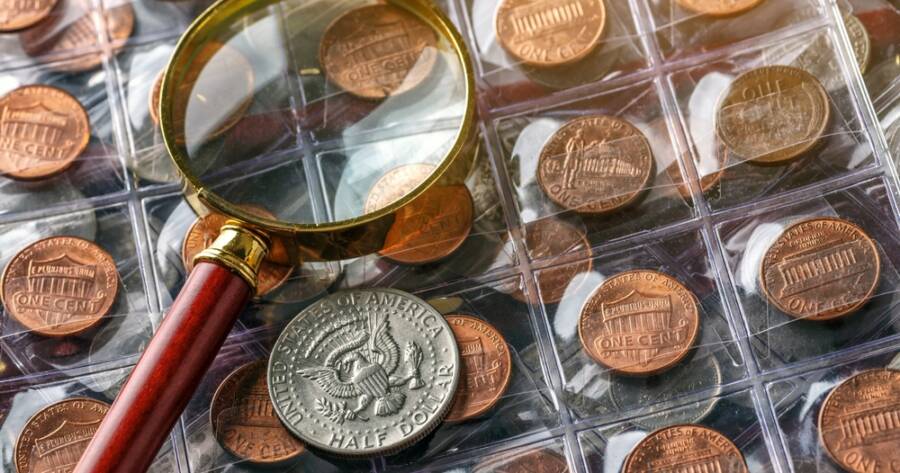
Some U.S. coins are worth far more than their face value, with the rarest examples selling for millions of dollars. Extraordinary scarcity, historical importance, condition, minting errors, and collector demand can turn an ordinary-looking coin into a major numismatic treasure. From early silver dollars to unusual pennies, America’s most valuable coins come with remarkable stories and equally remarkable prices.
What Makes a Coin Truly Valuable?
Not every old coin commands a high price, and not every expensive coin is particularly old. The factors that drive numismatic value are a combination of rarity, condition, historical significance, and collector demand (source). A coin struck in massive quantities centuries ago may be worth very little today, while a modern error coin produced in small numbers can fetch hundreds of thousands of dollars at auction.
Condition plays an especially critical role. Professional grading services assign coins numerical grades, and the difference between a coin graded “Good” versus one graded “Mint State” can translate to a price gap of millions of dollars for the rarest pieces. Provenance also matters enormously. Coins with documented ownership histories, particularly those that passed through famous collections, tend to draw higher bids when they reach the auction block.
Mintage figures tell part of the story. When a particular coin was struck in very limited numbers, or when most surviving examples were melted down or destroyed, the handful of remaining specimens become prizes that serious collectors compete fiercely to own. Error coins, those produced with unintended characteristics due to minting mistakes, occupy a unique category where the very defect becomes the prized quality.
The Most Valuable Coins in American History
At the very top of the American numismatic hierarchy sits the 1933 Saint-Gaudens Gold $20 Double Eagle. This coin carries an estimated collector value of $23,133,389, placing it firmly above every other United States coin in terms of appraised worth (source). Its story is equally remarkable: nearly all 1933 Double Eagles were ordered melted before they entered circulation, meaning only a tiny number escaped destruction.
The 1794 Flowing Hair Silver Dollar ranks among the most historically significant coins in the entire United States series. Produced during the first year the U.S. Mint struck silver dollars, this coin connects directly to the birth of the American monetary system. A rare variant featuring a silver plug carries an estimated collector value of $12,907,784, ranking it third among all valuable American coins (source).
The 1913 Liberty Head Nickel stands as one of the most famous coins in American collecting history. Only five specimens are known to survive, and their existence was initially shrouded in mystery since the Liberty Head design had been officially retired before any 1913 nickels were authorized for production. The coin’s estimated collector value stands at $5,636,095 (source).
Rare Error Coins and Unexpected Treasures
Among the most surprising entries on any list of highly valuable American coins are error pieces that came from the mint under extraordinary circumstances. The 1943-D Lincoln Wheat Cent struck in bronze or copper rather than the wartime zinc-coated steel that was standard for that year ranks 17th among the most valuable American coins, carrying an estimated value of $2,469,065 (source). During World War II, copper was reserved for military use, so pennies were supposed to be struck in steel. A few copper planchets left over from 1942 production accidentally made their way through the minting process, producing coins that now rank among the rarest American cents ever struck.
Error coins like these remind collectors that extreme value can come from the most unexpected places. A coin that might look like an ordinary cent in casual handling could, under expert examination, turn out to be a genuine rarity worth more than most homes. This reality drives many hobbyists to carefully examine their pocket change and inherited coin collections with fresh eyes.
The Auction Market for Rare Coins
Major auction houses have built entire specialty divisions dedicated to numismatic sales, and the records set at these events reflect the growing appetite among high-net-worth collectors for tangible historical assets. Rare coins have demonstrated an ability to hold and grow their value over decades, which has attracted not only traditional hobbyists but also investors who see numismatic pieces as an alternative asset class.
The most dramatic prices are typically achieved when multiple serious collectors compete directly for a single, historically significant coin. Auction results for the top American rarities show that condition-certified examples with strong provenance consistently outperform expectations. The combination of a perfect grade, a famous prior owner, and an intensely competitive auction environment can push a coin’s final sale price far beyond its pre-sale estimate.
Coins graded and authenticated by respected third-party services command a premium because buyers can trust the assigned grade without relying solely on personal examination. This certification ecosystem has made it easier for new collectors to participate confidently in the market, expanding the pool of potential buyers at the high end of the hobby.
Why You Should Learn More About Valuable Coins Today
The world of rare and valuable coins rewards those who take the time to understand what separates an ordinary piece of metal from a multimillion-dollar numismatic treasure. From the legendary 1933 Double Eagle to a wartime penny struck by accident in the wrong metal, the stories behind these objects are as compelling as their prices.
Condition, rarity, historical context, and documented ownership all shape what a coin is ultimately worth. Collectors who develop their knowledge gradually build the ability to recognize opportunity where others see nothing exceptional. Whether someone is examining an inherited collection or starting fresh, understanding the principles that drive numismatic value is the foundation of any serious engagement with this enduring hobby.